
THE “COUNTERTSPLASH”
The Rise of the Seamless Vertical SlabFor decades, the standard kitchen formula was predictable: pick a durable countertop, then spend weeks agonizing over a coordinating backsplash tile. But as we move into 2026, the design world is moving toward a more cohesive, sophisticated aesthetic.
Enter The Countersplash. By extending your quartz or mineral slab from the horizontal work surface directly up the wall, you create a seamless transition that designers are calling the “Gallery-Like” flow. Here is why the solid slab backsplash has officially dethroned the subway tile.
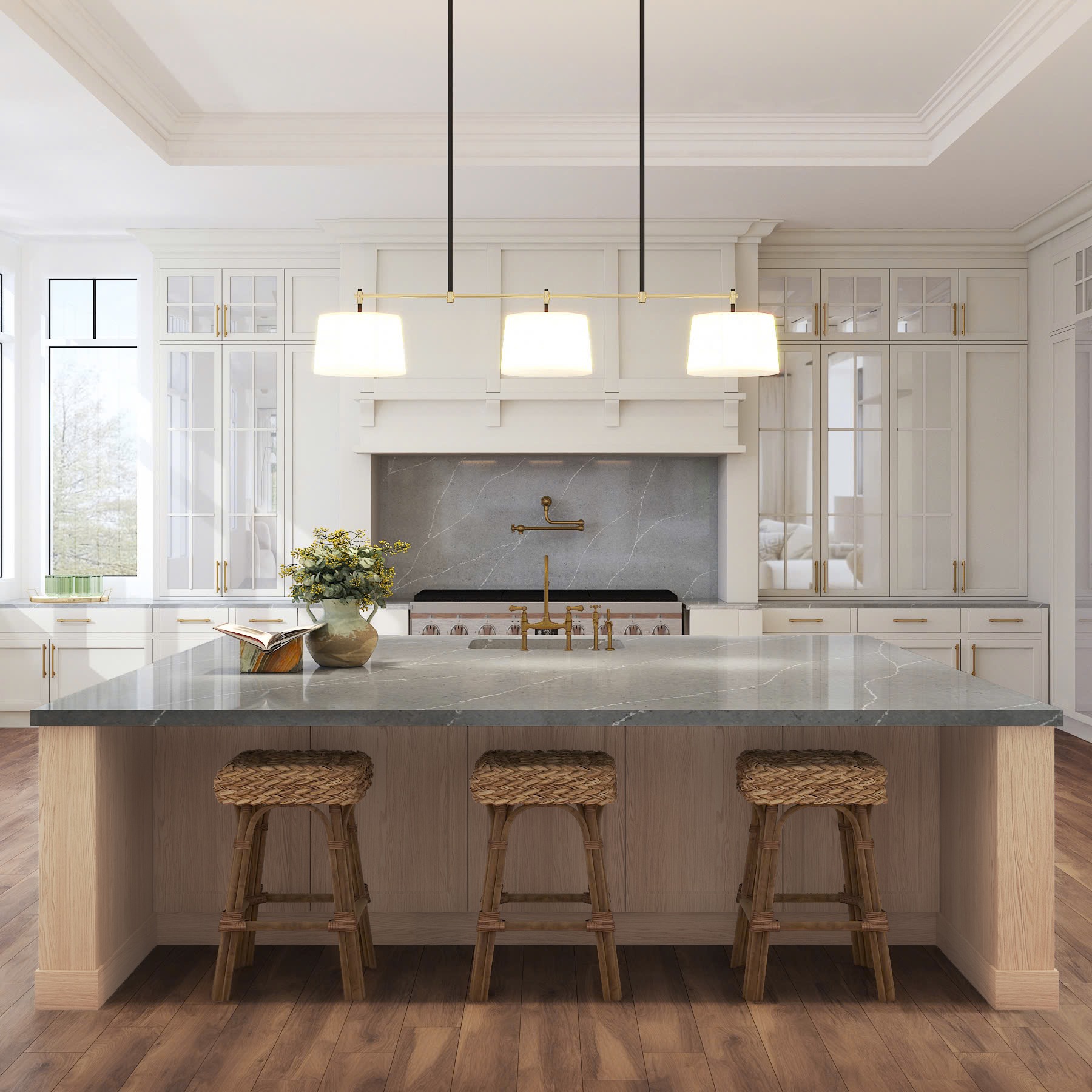
Hill County Quartz
The End of Grout (And the Start of Easy Cleaning)
Let’s be honest: no one enjoys scrubbing grout lines. Traditional tiles, while beautiful, create hundreds of tiny crevices where grease and steam can collect.
The seamless vertical slab offers a non-porous, wipe-and-go surface. Because quartz slabs are engineered for extreme durability, they can handle the heat of the stovetop and the splashes of the sink without staining or wearing down. It’s the ultimate “low-maintenance luxury.”
A Modern Heritage Look
While the Countersplash feels incredibly modern, it actually draws inspiration from historic European manor kitchens where solid stone was the standard. In 2026, we are seeing this “Modern Heritage” trend take off – pairing the old-world weight of a solid slab with the sleek, thin-profile edges of modern engineering.
Alamo Sand Quartz Slab
Visual Continuity – The “Infinity” Effect
In traditional kitchen design, the joint between the countertop and the wall acts as a visual “break.” This often makes a kitchen feel segmented. The Countersplash removes that boundary.
When you use a high-movement slab – with bold veining – carrying that pattern vertically allows the “art” of the stone to be seen at eye level. It transforms your kitchen from a utility space into a curated gallery.
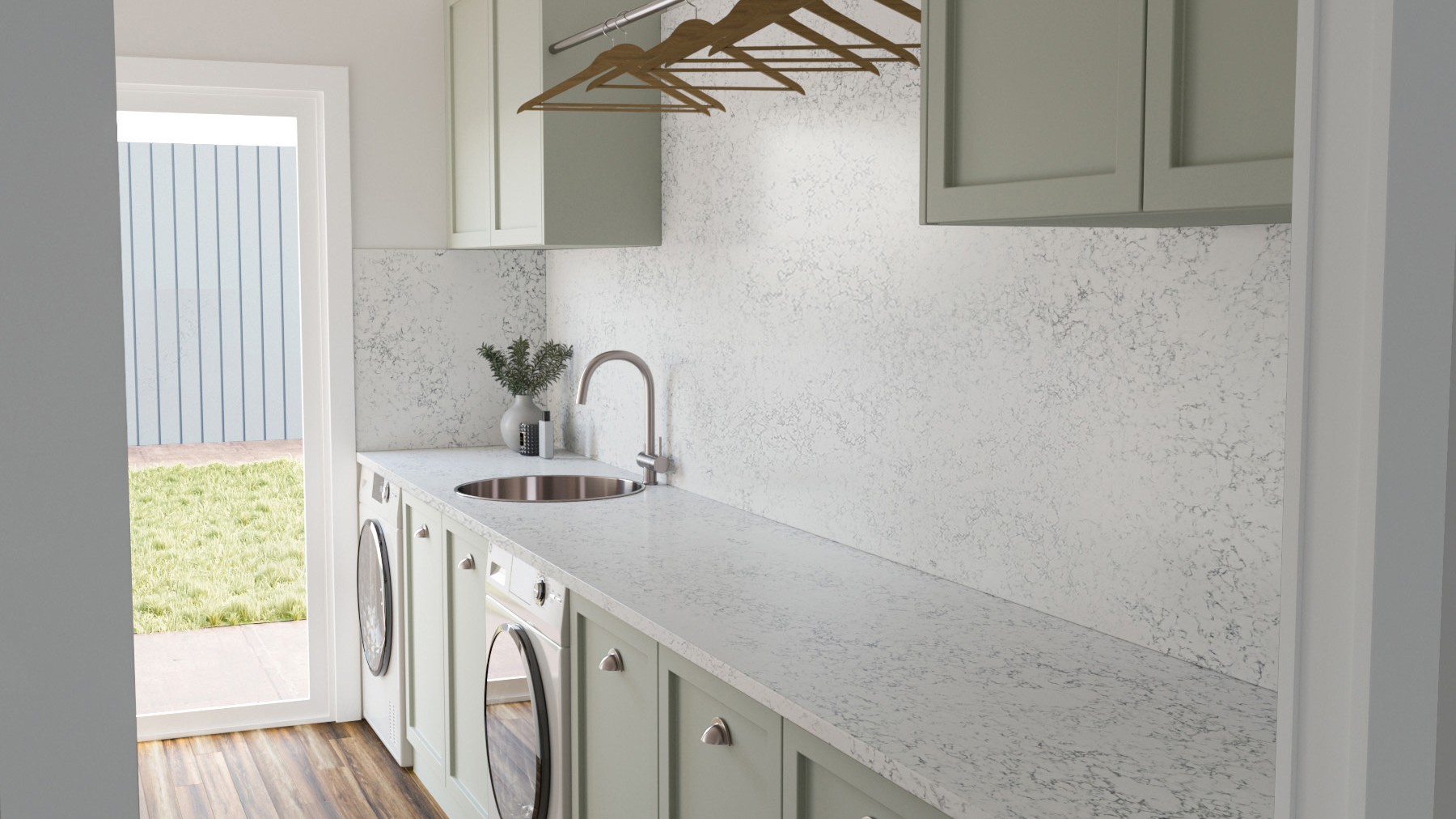
Denali Glacier Quartz
Making Small Kitchens Feel Massive
If you are working with a smaller footprint, the Countersplash is your best friend. By using a single material for both surfaces, the eye isn’t interrupted by competing patterns or colors. This creates a monochromatic “wash” that tricks the brain into perceiving the space as much larger and more open than it actually is.
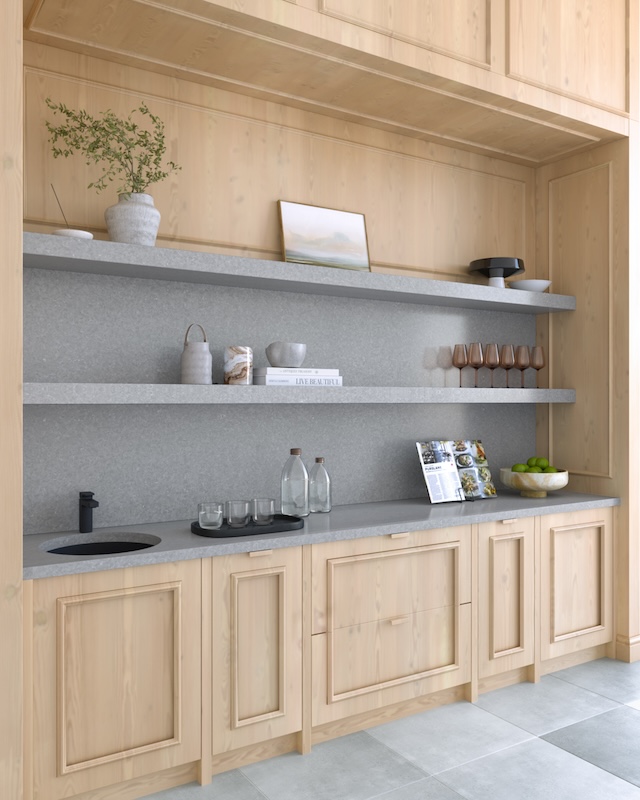
Austin Silver Quartz
Publish Date: January 15, 2026